






Are Heat Pump Dryers Replacing Vented Models? Buyer Trade-Offs
Heat pump dryers are becoming a stronger alternative to vented models, but replacement is uneven. Their lower electricity use and lack of an external exhaust duct make them attractive where energy costs or installation constraints matter. Vented dryers retain a practical role where suitable ducting already exists, purchase price carries more weight, or laundry needs to move through several consecutive loads.
The direction of change is clearer than the pace: heat pump technology addresses energy consumption and installation problems that conventional vented machines cannot easily solve. Whether that justifies replacing an existing dryer depends on running costs, cycle performance, maintenance, and the condition of the current installation.
Where heat pump dryers have the strongest advantage
A vented dryer heats air, passes it through wet laundry, and exhausts the warm, moisture-laden air outdoors. A heat pump dryer circulates process air through a system that removes moisture and recovers heat. Reusing that heat reduces the energy needed to continue drying.
This difference becomes more valuable with frequent drying. A machine used for most household laundry has more opportunities to recover a higher purchase price through lower running costs than one used occasionally during wet weather.
Installation creates a separate reason to switch. An apartment, internal laundry room, or renovation without a practical outdoor duct route gives a ventless dryer a clear advantage. However, ventless does not mean installation-free. Condensed water needs a collection tank or an approved drain connection, while the appliance still requires the clearances, electrical supply, and ambient conditions specified in its manual.
Regional conditions also prevent a single replacement pattern. Existing vent infrastructure, local electricity and gas prices, available appliance sizes, and service coverage all affect which technology remains practical. A comparison with an electric resistance vented dryer does not automatically describe the economics of replacing a gas dryer.
The differences that matter during everyday use
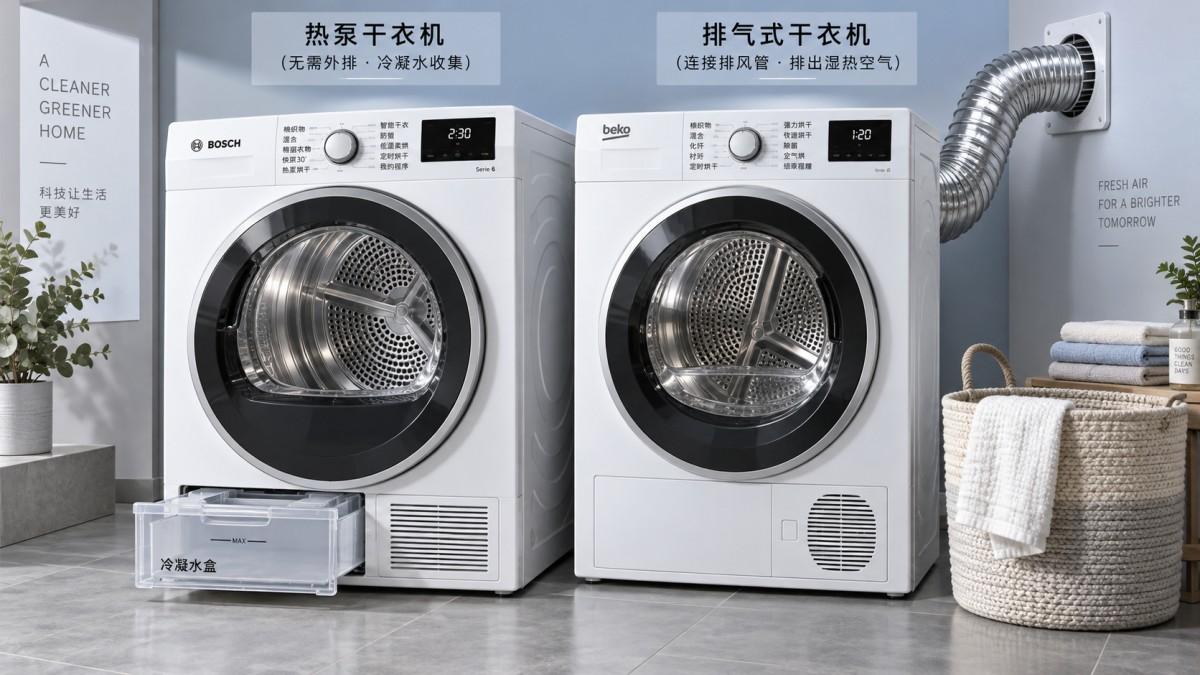
These differences explain why greater interest in heat pump technology does not make every vented installation obsolete. An existing dryer with an effective exhaust route presents a different replacement calculation from a new laundry space that would require building work.
Energy savings need a household calculation
The useful comparison is the cost of drying the same amount of laundry to a comparable dryness level. Energy figures become misleading when they refer to different load sizes, programs, or test methods. An eco cycle and a rapid cycle can also have very different energy and time profiles on the same appliance.
A straightforward estimate uses the difference in energy consumption per comparable cycle, multiplied by annual cycles and the local electricity tariff. Dividing the additional purchase and installation cost by that estimated annual saving gives a simple payback period. Repairs, financing, and future tariff changes sit outside that basic calculation.
Published annual consumption figures require attention to their assumed usage. A household drying fewer loads than the label assumes will accumulate savings more slowly. Conversely, frequent use increases the importance of each cycle’s consumption. For a gas dryer comparison, fuel and electricity costs need to be calculated separately.
There is also a building effect: a vented machine exhausts indoor air that must be replaced by air entering the home. Heating or cooling that replacement air adds a climate-dependent cost. A heat pump model avoids that exhaust loss, although it still releases some heat into its surroundings.
Drying time is a workflow issue
Longer drying cycles matter most when they delay the next load. If laundry runs overnight or across the week, an extended cycle may have little practical effect. Several loads completed in one afternoon create a tighter constraint, especially when washing finishes faster than drying.
Rated capacity alone does not describe this throughput. Bulky bedding needs room to tumble, while tightly packed fabrics restrict airflow and dry unevenly. A drum rated for a particular mass of cotton laundry does not guarantee that every bulky item will move freely inside it.
Washer extraction also changes the comparison. Laundry carrying more residual water takes longer and requires more energy to dry. A higher permitted spin speed can reduce that burden, but maximum rpm alone does not establish extraction performance across every fabric and wash program.
Combination appliances introduce another capacity limit. The XIAOYA Washer-Dryer XQG120-98922G丨12kg/6kg lists 12 kg washing capacity and 6 kg drying capacity. A full rated wash load therefore exceeds its drying capacity and needs splitting before drying. Its supplied specifications list condensing/venting drying without establishing heat pump technology; a washer-dryer label or ventless configuration alone does not identify the heating system.
Fabric care and maintenance change the ownership experience
Lower drying temperatures reduce heat exposure, which is useful for suitable garments whose care labels allow tumble drying. They do not make every fabric dryer-safe. Shrinkage and wear also depend on textile construction, mechanical action, cycle selection, and excessive drying.
Moisture sensors help control the endpoint, but mixed loads complicate their job. Thin synthetic garments and thick cotton seams dry at different rates. Separating substantially different fabrics can prevent a cycle from ending with damp heavy items or continuing after lighter pieces are already dry.
Maintenance affects both speed and efficiency. Restricted lint filters reduce airflow in either design. A vented machine also needs an unobstructed exhaust route: crushed ducting, excessive bends, or a blocked outside outlet can lengthen drying and cause overheating.
Heat pump maintenance varies by construction. Some machines have accessible additional filters or heat exchanger surfaces; others use automatic cleaning arrangements with their own maintenance instructions. Accessible filters, clear cleaning procedures, and local service availability deserve attention alongside the energy label. Delicate fins should only be cleaned using the method specified for the appliance.
When keeping a vented dryer remains reasonable
A functioning vented dryer with sound ducting, modest annual use, and acceptable running costs has a weaker financial case for immediate replacement. Its original purchase cost is already spent. Comparing the full price of a new heat pump model against future energy savings gives a different answer from comparing two new machines at the point of replacement.
Once replacement becomes necessary, the relevant price difference narrows to the alternatives available for that installation. Avoided duct work can strengthen the heat pump case, while infrequent use or demanding consecutive-load schedules can favor a vented model.
Before committing to either design, the most revealing evidence is comparable energy consumption, cycle duration at the intended load, installation requirements, and accessible maintenance instructions. Those details establish whether the technology fits the laundry routine more reliably than a broad claim that one dryer category is replacing another.
Request A Quote?
Stay updated with our latest news. We promise not to spam!