






Choose a vented dryer for lower upfront cost when outdoor venting is available, or a heat pump dryer for frequent use and lower electricity consumption.
A conventional condenser dryer suits homes without an exhaust route, especially when purchase price matters more than running costs. However, ventilation and drainage still matter.
The right choice depends on installation restrictions, laundry frequency, and total ownership cost. Start with your home’s limitations, then compare drying performance and useful features.
Which Dryer Type Matches Your Home?
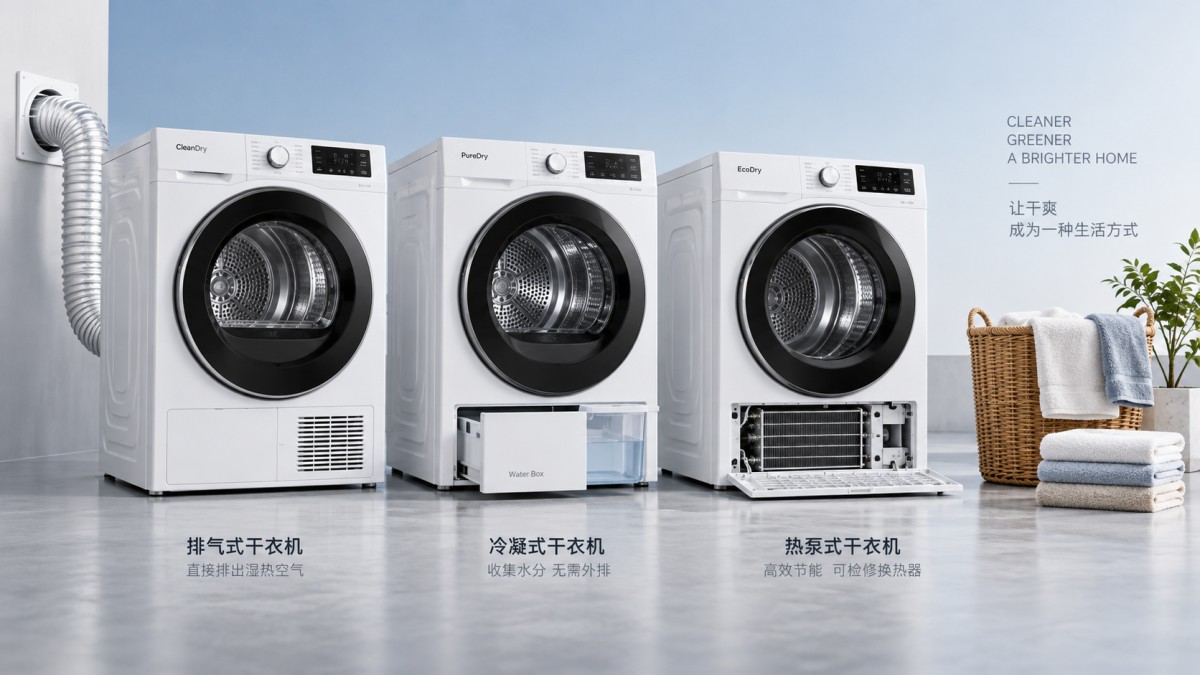
All three types tumble clothes while moving warm air through the drum. Their main difference is how they remove moisture and manage the resulting heat.
A heat pump dryer is technically a condenser dryer. In shopping comparisons, “condenser” usually means a conventional model using resistance heating; that distinction applies throughout this guide.
These are general tendencies, not guarantees. Compare individual models using the same testing standard, because capacity, programs, and sensor controls can change the result considerably.
Can You Install It Where You Actually Need It?
Check installation before comparing prices. A discounted dryer offers little value if your property cannot accommodate its exhaust, clearances, electrical supply, or permitted operating temperatures.
Vented dryers need a suitable outdoor exhaust route
A vented dryer sends warm, damp air outside through ducting. It suits a laundry room with an existing compliant outlet and a reasonably direct exhaust route.
Confirm the manufacturer’s permitted duct material, maximum length, and allowance for bends. Restricted airflow can extend drying times, increase energy use, and create a fire hazard.
Never discharge exhaust into an attic, wall cavity, or enclosed room. Renters should confirm permission before arranging a new wall opening or modifying an existing outlet.
Ventless dryers still need space, airflow, and water management
Condenser and heat pump dryers collect moisture in a tank or discharge it through a compatible drain connection. Check whether the required hose is included.
They still require the clearances and room conditions specified in their manuals. Conventional condenser dryers can noticeably warm a small laundry room during repeated cycles.
An unheated garage may fall outside a dryer’s operating temperature range. Heat pump performance can suffer in unsuitable conditions, so check the limits before ordering.
Measure doorways, access routes, and the installation space, including hoses and door clearance. Stack appliances only with a manufacturer-approved kit suitable for both specific models.
Will Lower Energy Bills Justify a Higher Purchase Price?
Heat pump dryers recover heat instead of continually replacing it with newly generated heat. This usually reduces electricity consumption compared with conventional electric resistance models.
The financial benefit grows with laundry frequency and electricity prices. Occasional users may take much longer to recover the higher purchase price through energy savings.
Use comparable energy-label data, your electricity tariff, and a realistic annual cycle count. Make sure figures describe equivalent programs, loads, and testing methods before calculating.
- Annual electricity cost = electricity per cycle in kWh × cycles per year × electricity price per kWh.
- Simple payback period = extra purchase cost ÷ estimated annual electricity savings.
For illustration, suppose one dryer uses 4 kWh per cycle and another uses 2 kWh. At 200 annual cycles, the difference totals 400 kWh yearly.
At an electricity price of $0.25 per kWh, that saves $100 annually. A $400 purchase premium would therefore take approximately four years to recover.
These figures illustrate the calculation, not guaranteed model performance. Include installation charges, maintenance requirements, warranty coverage, and local service availability when comparing total ownership costs.
How Much Do Drying Time and Fabric Care Matter?
Vented and conventional condenser dryers often complete comparable loads faster than heat pump models, but actual timing depends on the program, load, airflow, and design.
A heat pump dryer generally uses lower temperatures, which can suit everyday fabric care. Always follow garment labels, since some items remain unsuitable for tumble drying.
If you wash several loads consecutively, compare published cycle times alongside energy figures. A lower electricity bill may involve a schedule adjustment on busy laundry days.
Sensor drying is useful across all three types. It monitors conditions associated with dryness and can help prevent unnecessary running when the load reaches its target.
Match capacity to your normal laundry volume. A kilogram rating generally refers to dry laundry weight, and some programs accept less than the machine’s maximum capacity.
For bulky bedding, check the recommended program and load allowance. Overfilling restricts movement, while mixed loads of thin clothing and thick towels may dry unevenly.
What Should You Look for in a Vented Dryer?
If your home already has suitable outdoor venting, focus on fit, drying controls, and everyday access. These practical details often matter more than numerous specialty programs.
The XIAOYA Vented Dryer XH80-Z711丨7kg offers a 7 kg drying capacity and measures 600 × 560 × 850 mm, giving buyers concrete dimensions to check.
Its listed features include sensor drying, timed drying, eight programs, and high, medium, and low heat settings. A stainless steel drum supports routine household use.
A drum light, lint-clean reminder, child lock, and 180-degree door opening address everyday convenience. Allow additional installation space for the exhaust connection and required clearances.
Choose this type when its capacity, installation requirements, and controls match your household. Compare energy-label information separately, since listed features alone cannot establish running costs.
Which Choice Will Work Best Over the Years?
Choose a vented dryer when you have an approved exhaust route, want a lower initial price, and value straightforward operation with potentially shorter drying cycles.
Choose a conventional condenser dryer when outdoor venting is unavailable and your drying needs are occasional. Check room ventilation and electricity consumption before committing to one.
Choose a heat pump dryer when you dry frequently, expect to keep the appliance for years, and can accommodate its purchase price and cycle times.
Whichever type you select, clean lint filters as directed, maintain the exhaust or condenser system according to the manual, and keep required airflow paths clear.
Before buying, confirm installation suitability, comparable energy consumption, usable capacity, and local service support. Together, these checks turn a broad dryer comparison into a confident purchase.