






Is the XH80-Z711 7kg Vented Dryer Right for Your Laundry Load?
The XH80-Z711 7kg vented dryer is a sensible option to consider if you dry regular loads of everyday clothing and have a suitable route for exhausting moist air outdoors. It is less suited to a home without outdoor venting access, or a routine built around large, bulky loads that you want to dry in one cycle.
When assessing the Vented Dryer XH80-Z711丨7kg, start with three questions: how much laundry you dry at once, what those loads contain, and where the exhaust duct will go. The capacity figure helps answer the first question, but fabric bulk and installation conditions can change the buying decision.
What does a 7kg drying capacity mean for your laundry?
A dryer's stated capacity refers to the weight of dry textiles before washing. It does not mean you should weigh a basket of wet clothes and stop at 7kg. Water retained after washing adds weight without increasing the amount of fabric in the load.
To understand your routine, weigh an empty laundry basket, then weigh it again with a typical load of dry clothes. Subtract the basket weight. This gives you a more useful starting point than estimating capacity from the number of people in your household.
Weight is only part of the picture. Clothes need space to lift, separate, and fall through the warm airflow. A load of shirts and lightweight trousers behaves differently from an equally heavy load of thick towels. Bulky items can occupy the drum before reaching its weight limit.
The stated capacity also does not mean every fabric type can use the full allowance. Delicate and synthetic programs may require smaller loads to manage heat exposure and creasing. Your usual fabric mix therefore matters as much as your largest weekly wash.
Judge the XH80-Z711 against the loads you actually dry
A 7kg dryer can be a practical match for someone who washes throughout the week and dries manageable batches. It may feel restrictive if laundry accumulates until the weekend, especially when several loads need to move through the washer and dryer in quick succession.
For bedding, distinguish between covers and filled items. A duvet cover may be relatively light yet prone to tangling. A filled duvet needs room for its filling to move and dry throughout. Neither should be judged solely by whether it fits through the door.
Outdoor venting can decide whether this dryer belongs in your home
A vented tumble dryer moves moisture out of the appliance through an exhaust duct. That makes the duct route part of the installation, rather than an accessory to consider after delivery.
A suitable position needs space for the appliance, its door opening, and the exhaust connection. A dryer that fits neatly into an alcove may still be unsuitable if pushing it into place crushes the duct behind it. Restricted airflow can slow drying and contribute to overheating.
Before choosing the location, work through these practical points:
- Outdoor discharge: The exhaust needs a suitable route outside, away from enclosed roof spaces or internal rooms.
- Duct layout: Plan a short, direct route using ducting suitable for dryer exhaust, within the installation instructions' length and bend limits.
- Air supply: The installation area needs adequate incoming air; a tightly enclosed cupboard can restrict operation.
- Cleaning access: Both the lint filter and exhaust route need to remain accessible for maintenance.
- Electrical connection: Include the required supply and socket position in the installation plan.
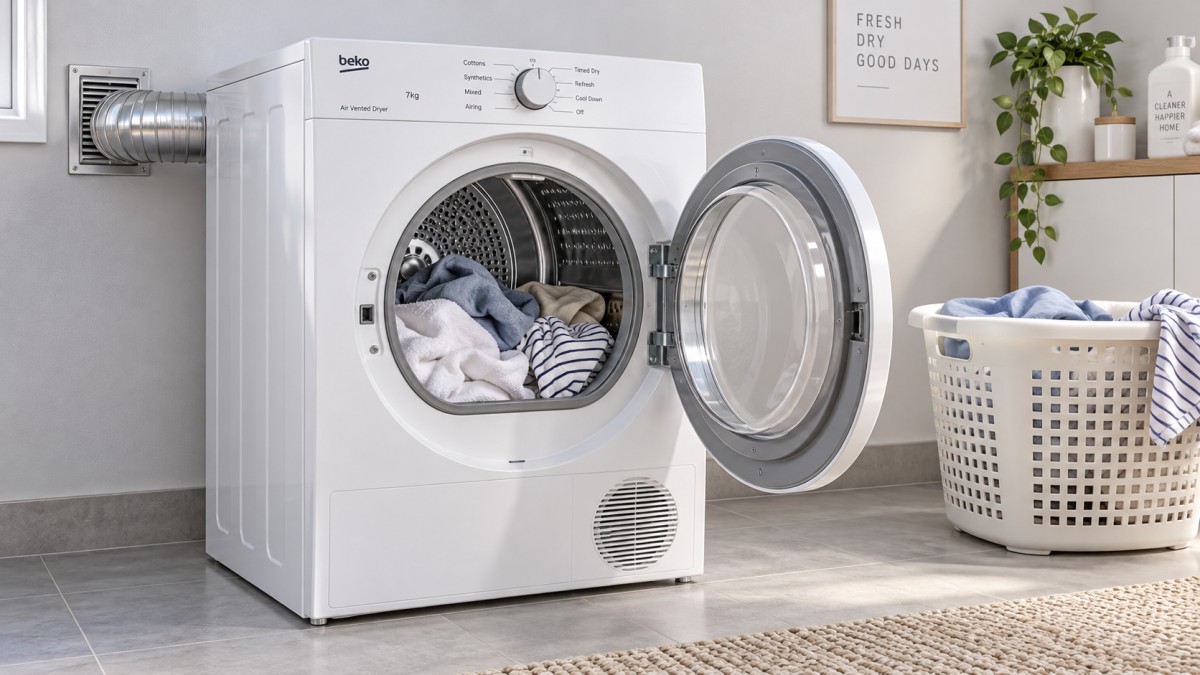
Discharging moist air indoors can cause condensation and dampness. An open window nearby does not necessarily provide an effective exhaust arrangement. For a rented property, establish whether an existing outlet is usable and whether alterations are permitted before committing to a vented model.
If there is no practical outdoor route, a condenser or heat pump dryer may suit the room better. These collect moisture rather than relying on a conventional outdoor exhaust duct, although they still need appropriate space, operating conditions, and maintenance.
Match the dryer to your washer without assuming every load transfers directly
A 7kg washer and a 7kg dryer offer a useful starting point for planning a laundry setup. However, a full washing load may still need dividing for drying because of fabric type, bulk, or the drying program's load limit.
For example, the XIAOYA Washer XQG70-B761丨7kg has a stated 7kg washing capacity and a maximum spin speed of 1200rpm. Those specifications are relevant when planning washing and drying together: effective spinning removes water before clothes reach the dryer, reducing the moisture it must evaporate.
Use a spin setting appropriate for the fabric. Maximum speed is not suitable for every garment, and the final moisture level also depends on the load and selected wash program. Likewise, matching brand names or capacities does not establish stacking compatibility. Stacking requires an approved arrangement and suitable fixing hardware.
Running costs depend on how often—and how well—you dry
Capacity alone cannot tell you what the XH80-Z711 will cost to run. For a meaningful comparison, use energy-consumption figures measured on a comparable basis, then apply your electricity tariff and expected number of cycles. Rated electrical power by itself does not describe energy use across a complete drying cycle.
Vented dryers generally use more electricity than heat pump dryers for comparable drying tasks. If you dry most days, that difference deserves more weight in the purchase decision. If you mainly need occasional help during wet weather, purchase and installation costs may carry greater importance.
Vented appliances also discharge indoor air outdoors. In a heated or cooled home, replacement air can add to the household's heating or cooling demand. The effect depends on the building and climate, but it is another reason to consider the whole installation rather than the appliance price alone.
Daily habits matter too. Clean the lint filter as directed, keep the exhaust unobstructed, and separate heavy towels from lightweight clothing when practical. Avoid adding wet items halfway through a load, since clothes already partly dry then receive unnecessary extra tumbling.
Decide which controls you need before buying
The features most useful to you will depend on what you dry. If you frequently handle synthetics or garments with temperature restrictions, suitable heat settings deserve close attention. If you want the appliance to manage the endpoint, look for moisture-sensing controls; timed drying requires more judgment when setting the duration.
Treat these as selection criteria when comparing the XH80-Z711 with alternatives. Do not assume that a 7kg capacity or a model name establishes sensor drying, particular fabric programs, or installation options.
Choose this size and dryer type when your normal loads are manageable, your exhaust route is practical, and repeated cycles fit your schedule. If outdoor venting is the obstacle, consider another drying technology. If bulky laundry is the obstacle, focus on usable drum space and item suitability. Start with your most common load and your planned installation location—those two checks will narrow the decision more effectively than capacity alone.

Request A Quote?
Stay updated with our latest news. We promise not to spam!