






XH80-Z711 Dryer Not Drying Well? Checks Before a Service Call
XH80-Z711 Dryer Not Drying Well? Checks Before a Service Call
If your Vented Dryer XH80-Z711丨7kg leaves clothes damp after a full cycle, another long run is not necessarily the answer. Restricted exhaust airflow, tightly packed laundry, or an unsuitable setting can all produce similar symptoms. The useful question is whether moisture is failing to leave the machine, the load is difficult to dry, or the dryer needs professional attention.
Start with the accessible checks below. Control layouts and installation requirements can vary, so use the manual supplied with your machine for program names, duct specifications, and maintenance instructions. Do not remove cabinet panels or attempt electrical testing.
Check for warning signs before running it again
A burning smell, smoke, scorching, a damaged power cord, repeated breaker trips, or an unusually hot plug or socket is not a reason to try a different cycle. Stop using the dryer. Disconnect power only if safe; if there is smoke or fire, keep away and contact emergency services as appropriate.
For ordinary damp laundry without those warning signs, let the machine cool and unplug it before cleaning the filter or inspecting accessible ducting. Never bypass a door switch, thermal protection device, or other safety component.
Start with the lint filter—even if it looks almost clean
A vented dryer needs moving air to carry moisture outside. Lint on the filter reduces that airflow, so clothes can feel warm while remaining damp. Remove the filter as described in the manual and clear the entire mesh surface, including lint gathered around the edges.
Hold it toward the light. A thin film or fine lint may be less obvious than the thick layer you peel away. If washing is permitted by the manufacturer, follow its cleaning instructions and dry the filter fully before reinstalling it. Replace a damaged filter rather than running the dryer without it.
Clean only the accessible filter recess using an approved method. Do not push tools deep inside the machine or force debris farther into an air passage.
Follow the exhaust route, not just the hose behind the dryer
A clean filter does not rule out an airflow problem. Check whether the exhaust duct has been crushed behind the appliance, sharply bent, or disconnected. This is particularly worth checking if drying became worse after moving the dryer or pushing it back into position.
Inspect the outdoor termination from a safe, accessible position. Visible lint buildup or a stuck outlet flap can restrict discharge. Do not climb, reach into an operating outlet, or disturb nests yourself. Concealed ductwork, inaccessible outlets, and substantial buildup are better handled by a qualified vent-cleaning provider.
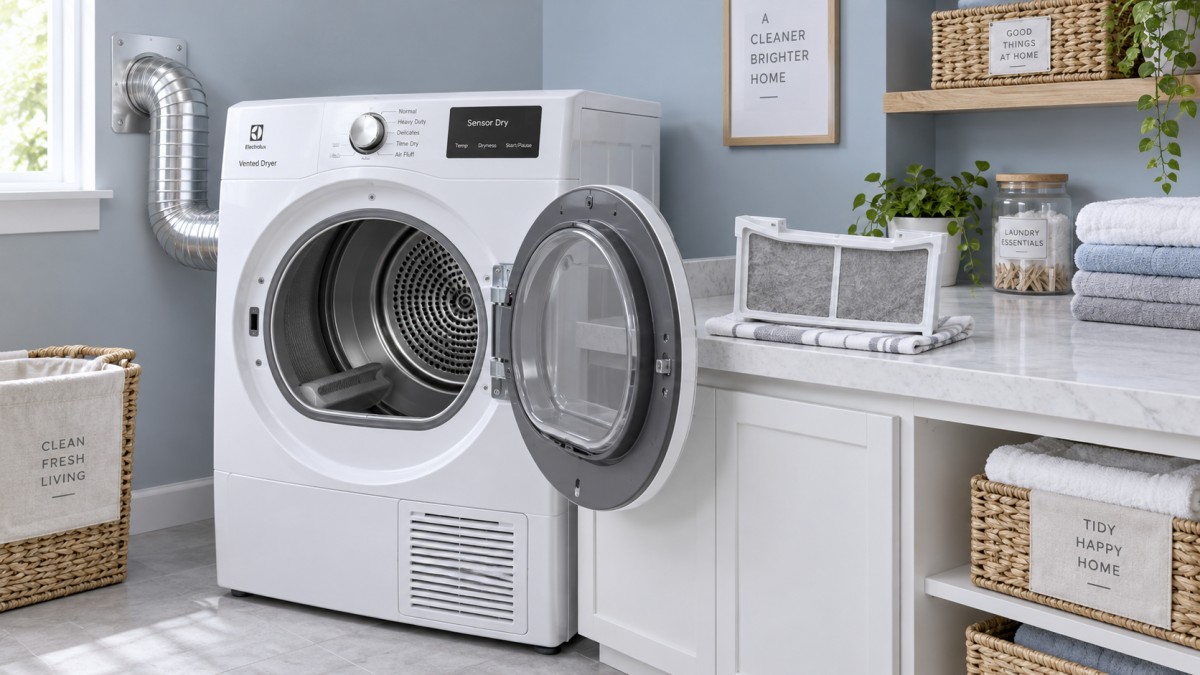
Compare the installation with the dryer’s instructions, including permitted duct material, route, length, and bends. There is no reliable universal limit to substitute for the model’s requirements. Keep required room ventilation openings clear, too: exhaust airflow depends on replacement air entering the space.
Do not disconnect the exhaust and run the dryer into the room as a shortcut diagnostic test. That releases moist air and lint indoors and does not demonstrate that the installed system is suitable.
Look at how the laundry moves
The 7kg rating is not a promise that every bulky load fitting through the door will dry well. Rated capacity generally refers to dry textile weight under specified conditions; program and fabric restrictions still matter. A drum packed with bedding leaves little room for items to lift, separate, and expose wet surfaces to airflow.
If sheets have wrapped around smaller items, untangle them and reduce the load. Dry heavy towels separately from lightweight shirts when practical. A dry shirt beside a damp towel may reflect mixed fabric thickness rather than a machine fault.
Also check the laundry before it enters the dryer. Dripping items or unusually heavy, wet towels suggest that the washer’s spin stage deserves attention. Use an additional spin only when the washer instructions and fabric care labels allow it. Excess incoming water adds drying work even when the dryer is operating normally.
Capacity differences matter across appliance types as well. Shandong Xiaoya Group Household Appliances Co., Ltd., founded in 1979, manufactures front-loading washers, wall-mounted mini washers, and tumble dryers. Its XIAOYA Washer-Dryer 75912GE丨8kg/4kg, for example, specifies 8kg washing capacity but 4kg drying capacity. Those figures do not apply to the XH80-Z711; they illustrate why a full wash load should not automatically become a full drying load.
Confirm the setting before assuming the heater has failed
Check that the selected program actually includes heated drying. If the controls offer an airing option or a setting intended to leave clothes ready for ironing, a damp result may be consistent with that selection. Consult the manual rather than guessing from an unfamiliar symbol.
Choose a program suitable for the fabric. Higher heat is not a safe universal fix: it may damage synthetics or delicate garments without resolving blocked airflow. Items can also feel different while warm, so allow them to cool briefly before judging the result. Wet waistbands, seams, and pockets are more useful clues than surface warmth alone.
Use one controlled test, then decide
After correcting accessible issues, try a modest load of similar, properly spun items on a suitable drying program. Refit the filter and reconnect everything correctly first. Avoid changing several settings or repeatedly extending drying time; that makes the result harder to interpret.
- The smaller load dries normally: load size, tangled bedding, or mixed fabrics likely contributed.
- Clothes remain warm and damp: unresolved airflow restriction or excessive incoming moisture remains possible. Warmth alone does not prove correct operation.
- There is no apparent heating on a confirmed heated program: arrange service. Heater, control, protection, or supply faults require professional diagnosis.
- The cycle stops unexpectedly or displays an error: record the exact indication and check the manual. Do not repeatedly reset it to force continued operation.
When booking service, provide the model and serial number, selected program, approximate load, any error indication, and whether the problem began suddenly or developed gradually. Mention the filter and exhaust checks already completed. If one sensible test still leaves a modest, well-spun load wet, stop adding cycles and arrange an inspection.

Request A Quote?
Stay updated with our latest news. We promise not to spam!